NBScience Barcelona Stem Cells Clinic · Carrer de Dos de Maig 301, Barcelona, Spain. This page is designed for international patients who want a serious and medically cautious explanation. It does not replace standard care and does not promise a cure. It explains how an autologous mesenchymal cell protocol may be evaluated as a biological support strategy in Barcelona.
Mechanisms
This page is designed for international patients who want a serious and medically cautious explanation. It does not replace standard care and does not promise a cure. It explains how an autologous mesenchymal cell protocol may be evaluated as a biological support strategy in Barcelona.
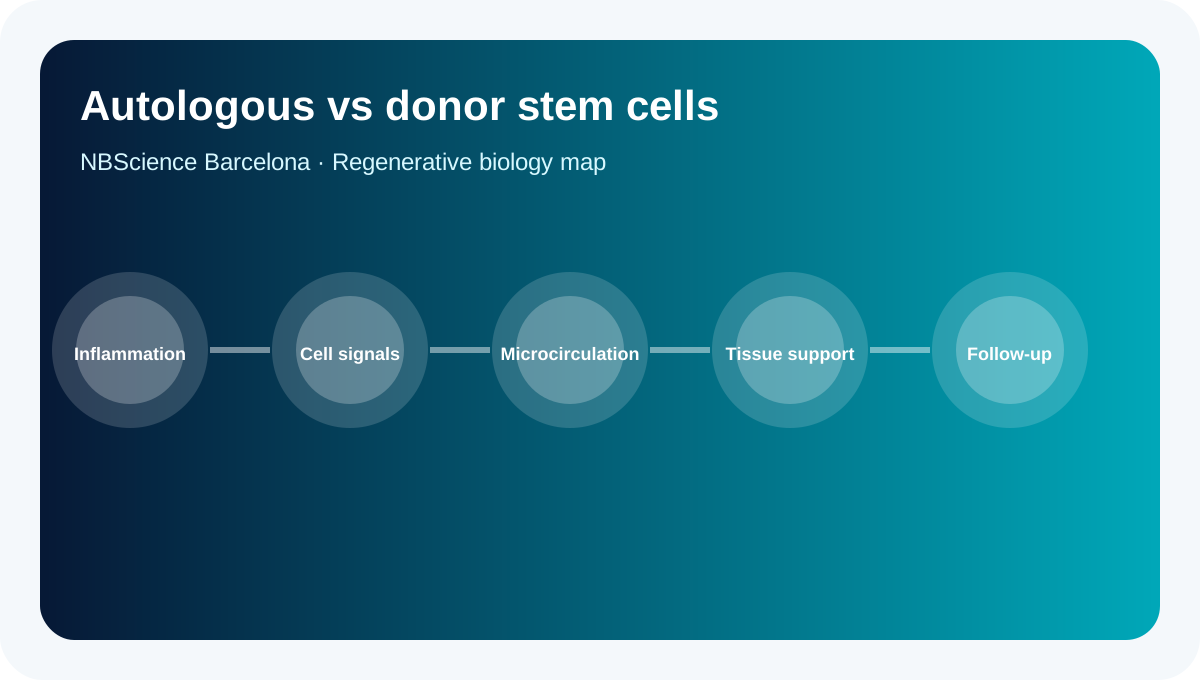
Autologous mesenchymal cells are studied for paracrine signaling, trophic factor release, extracellular vesicle communication, immunomodulation and support of the tissue microenvironment. Many chronic conditions involve inflammation, fibrosis, oxidative stress, mitochondrial stress, impaired microcirculation and dysregulated repair signaling.
The biological discussion focuses on communication between cells, regulation of inflammatory signals, trophic support, extracellular vesicles, mitochondrial resilience and tissue microenvironment. In regenerative medicine, the logic is not only about the number of cells, but about quality, viability, signaling capacity, processing conditions and clinical appropriateness.
Potential changes are individual. They may involve fatigue, activity tolerance, discomfort, stiffness, inflammatory flares, recovery after effort, sleep quality or perceived resilience. Any change must be interpreted cautiously with medical follow-up and objective measurements where possible.
The Barcelona pathway begins with medical file review, diagnostic context, previous treatment analysis, risk assessment, contraindication review and definition of realistic objectives. Only after this stage can a personalized protocol be considered.
Monitoring may include symptoms, functional tolerance, medical history, laboratory values, imaging results and patient-reported outcomes. In every case, interpretation must remain cautious because regenerative responses are individual and influenced by disease severity, age, comorbidities and previous treatment.
This page is designed for international patients who want a serious and medically cautious explanation. It does not replace standard care and does not promise a cure. It explains how an autologous mesenchymal cell protocol may be evaluated as a biological support strategy in Barcelona.
Autologous mesenchymal cells are studied for paracrine signaling, trophic factor release, extracellular vesicle communication, immunomodulation and support of the tissue microenvironment. Many chronic conditions involve inflammation, fibrosis, oxidative stress, mitochondrial stress, impaired microcirculation and dysregulated repair signaling.
The biological discussion focuses on communication between cells, regulation of inflammatory signals, trophic support, extracellular vesicles, mitochondrial resilience and tissue microenvironment. In regenerative medicine, the logic is not only about the number of cells, but about quality, viability, signaling capacity, processing conditions and clinical appropriateness.
Potential changes are individual. They may involve fatigue, activity tolerance, discomfort, stiffness, inflammatory flares, recovery after effort, sleep quality or perceived resilience. Any change must be interpreted cautiously with medical follow-up and objective measurements where possible.
The Barcelona pathway begins with medical file review, diagnostic context, previous treatment analysis, risk assessment, contraindication review and definition of realistic objectives. Only after this stage can a personalized protocol be considered.
Monitoring may include symptoms, functional tolerance, medical history, laboratory values, imaging results and patient-reported outcomes. In every case, interpretation must remain cautious because regenerative responses are individual and influenced by disease severity, age, comorbidities and previous treatment.
This page is designed for international patients who want a serious and medically cautious explanation. It does not replace standard care and does not promise a cure. It explains how an autologous mesenchymal cell protocol may be evaluated as a biological support strategy in Barcelona.
Autologous mesenchymal cells are studied for paracrine signaling, trophic factor release, extracellular vesicle communication, immunomodulation and support of the tissue microenvironment. Many chronic conditions involve inflammation, fibrosis, oxidative stress, mitochondrial stress, impaired microcirculation and dysregulated repair signaling.
The biological discussion focuses on communication between cells, regulation of inflammatory signals, trophic support, extracellular vesicles, mitochondrial resilience and tissue microenvironment. In regenerative medicine, the logic is not only about the number of cells, but about quality, viability, signaling capacity, processing conditions and clinical appropriateness.
Potential changes are individual. They may involve fatigue, activity tolerance, discomfort, stiffness, inflammatory flares, recovery after effort, sleep quality or perceived resilience. Any change must be interpreted cautiously with medical follow-up and objective measurements where possible.
The Barcelona pathway begins with medical file review, diagnostic context, previous treatment analysis, risk assessment, contraindication review and definition of realistic objectives. Only after this stage can a personalized protocol be considered.
Monitoring may include symptoms, functional tolerance, medical history, laboratory values, imaging results and patient-reported outcomes. In every case, interpretation must remain cautious because regenerative responses are individual and influenced by disease severity, age, comorbidities and previous treatment.
This page is designed for international patients who want a serious and medically cautious explanation. It does not replace standard care and does not promise a cure. It explains how an autologous mesenchymal cell protocol may be evaluated as a biological support strategy in Barcelona.
Autologous mesenchymal cells are studied for paracrine signaling, trophic factor release, extracellular vesicle communication, immunomodulation and support of the tissue microenvironment. Many chronic conditions involve inflammation, fibrosis, oxidative stress, mitochondrial stress, impaired microcirculation and dysregulated repair signaling.
The biological discussion focuses on communication between cells, regulation of inflammatory signals, trophic support, extracellular vesicles, mitochondrial resilience and tissue microenvironment. In regenerative medicine, the logic is not only about the number of cells, but about quality, viability, signaling capacity, processing conditions and clinical appropriateness.
Potential changes are individual. They may involve fatigue, activity tolerance, discomfort, stiffness, inflammatory flares, recovery after effort, sleep quality or perceived resilience. Any change must be interpreted cautiously with medical follow-up and objective measurements where possible.
The Barcelona pathway begins with medical file review, diagnostic context, previous treatment analysis, risk assessment, contraindication review and definition of realistic objectives. Only after this stage can a personalized protocol be considered.
Monitoring may include symptoms, functional tolerance, medical history, laboratory values, imaging results and patient-reported outcomes. In every case, interpretation must remain cautious because regenerative responses are individual and influenced by disease severity, age, comorbidities and previous treatment.
Conditions
Potential changes are individual. They may involve fatigue, activity tolerance, discomfort, stiffness, inflammatory flares, recovery after effort, sleep quality or perceived resilience. Any change must be interpreted cautiously with medical follow-up and objective measurements where possible.
Science
- Autologous mesenchymal cells are studied for paracrine signaling, trophic factor release, extracellular vesicle communication, immunomodulation and support of the tissue microenvironment. Many chronic conditions involve inflammation, fibrosis, oxidative stress, mitochondrial stress, impaired microcirculation and dysregulated repair signaling.
- The biological discussion focuses on communication between cells, regulation of inflammatory signals, trophic support, extracellular vesicles, mitochondrial resilience and tissue microenvironment. In regenerative medicine, the logic is not only about the number of cells, but about quality, viability, signaling capacity, processing conditions and clinical appropriateness.
- Monitoring may include symptoms, functional tolerance, medical history, laboratory values, imaging results and patient-reported outcomes. In every case, interpretation must remain cautious because regenerative responses are individual and influenced by disease severity, age, comorbidities and previous treatment.
Patient journey
The Barcelona pathway begins with medical file review, diagnostic context, previous treatment analysis, risk assessment, contraindication review and definition of realistic objectives. Only after this stage can a personalized protocol be considered.
①
②
③
④
Patient experiences
FAQ
Is this a guaranteed treatment?
No. Outcomes cannot be guaranteed and protocols depend on medical evaluation.
Why autologous cells?
Autologous cells come from the patient’s own biological material and support a personalized strategy.
Why Barcelona?
Barcelona offers a European, accessible and international medical environment with strong premium positioning.
General medical information. Protocols are personalized after medical evaluation. Outcomes cannot be guaranteed.